Split Fish Layer
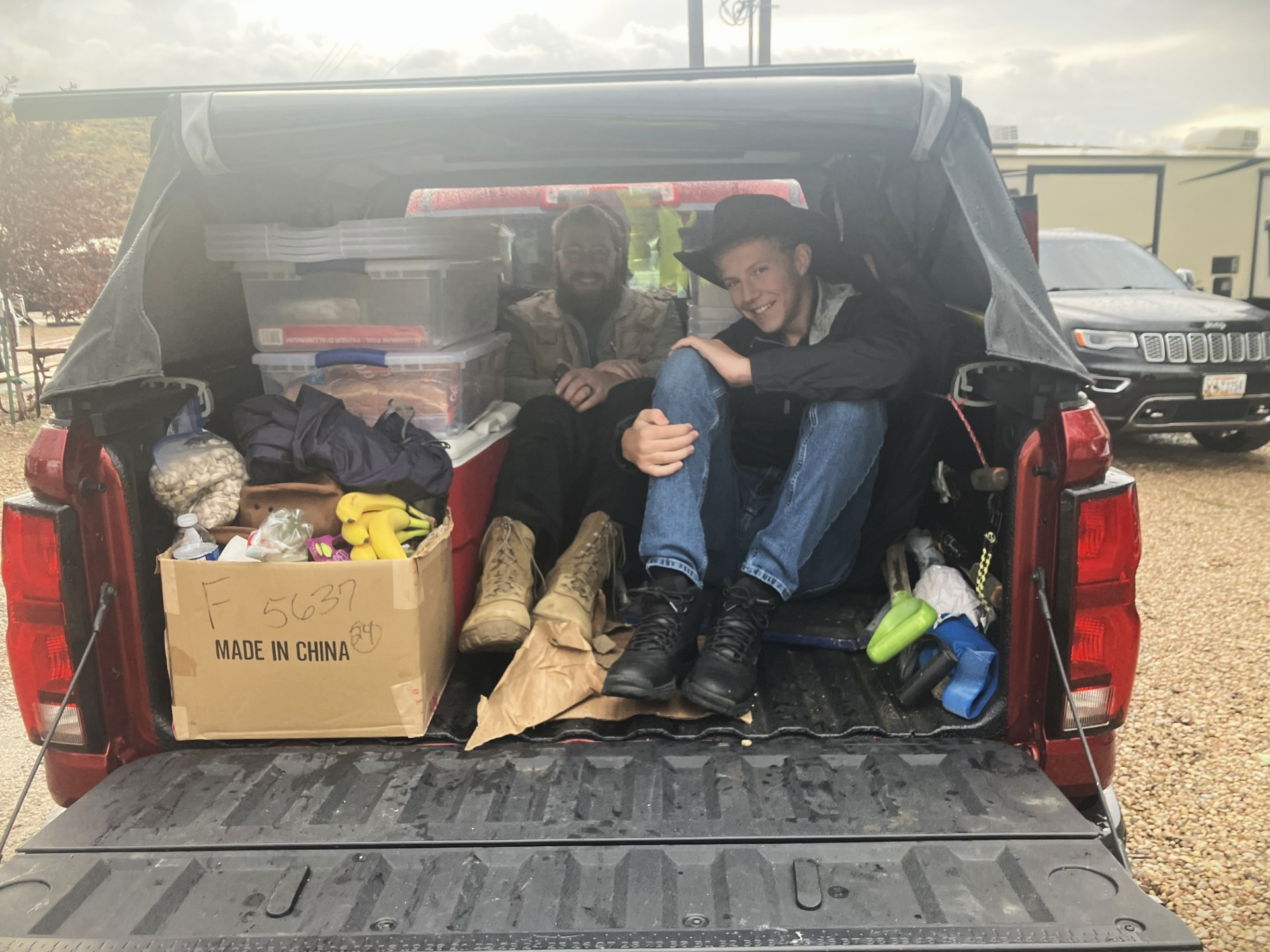
The first fossil dig of our 2025 trip west was a full-day, exclusive dig with Fossil Lake Safari in the famous Split-Fish layer. The first problem was getting all of us from Kemmerer out to the quarry. We not only loaded the truck bed with plastic tubs to hold the fossils we expected to find, but also the food, equipment and our two tallest diggers (Joe and Matthew), The other 5 of us were packed into the extended cab of our truck. Joe and Matt got a good shake by the wash-boarded road, but everyone made it safe and eager to find fossils.
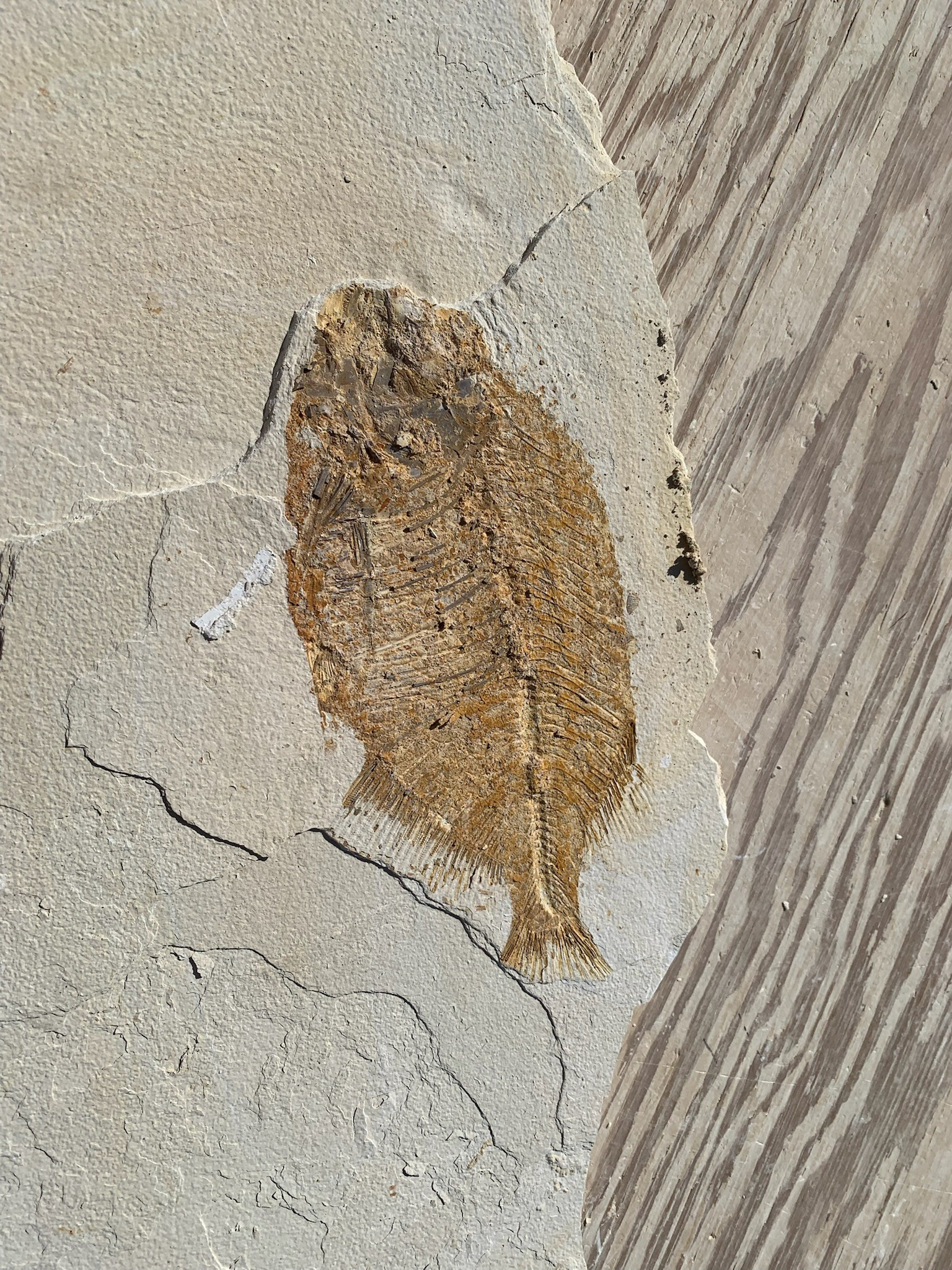
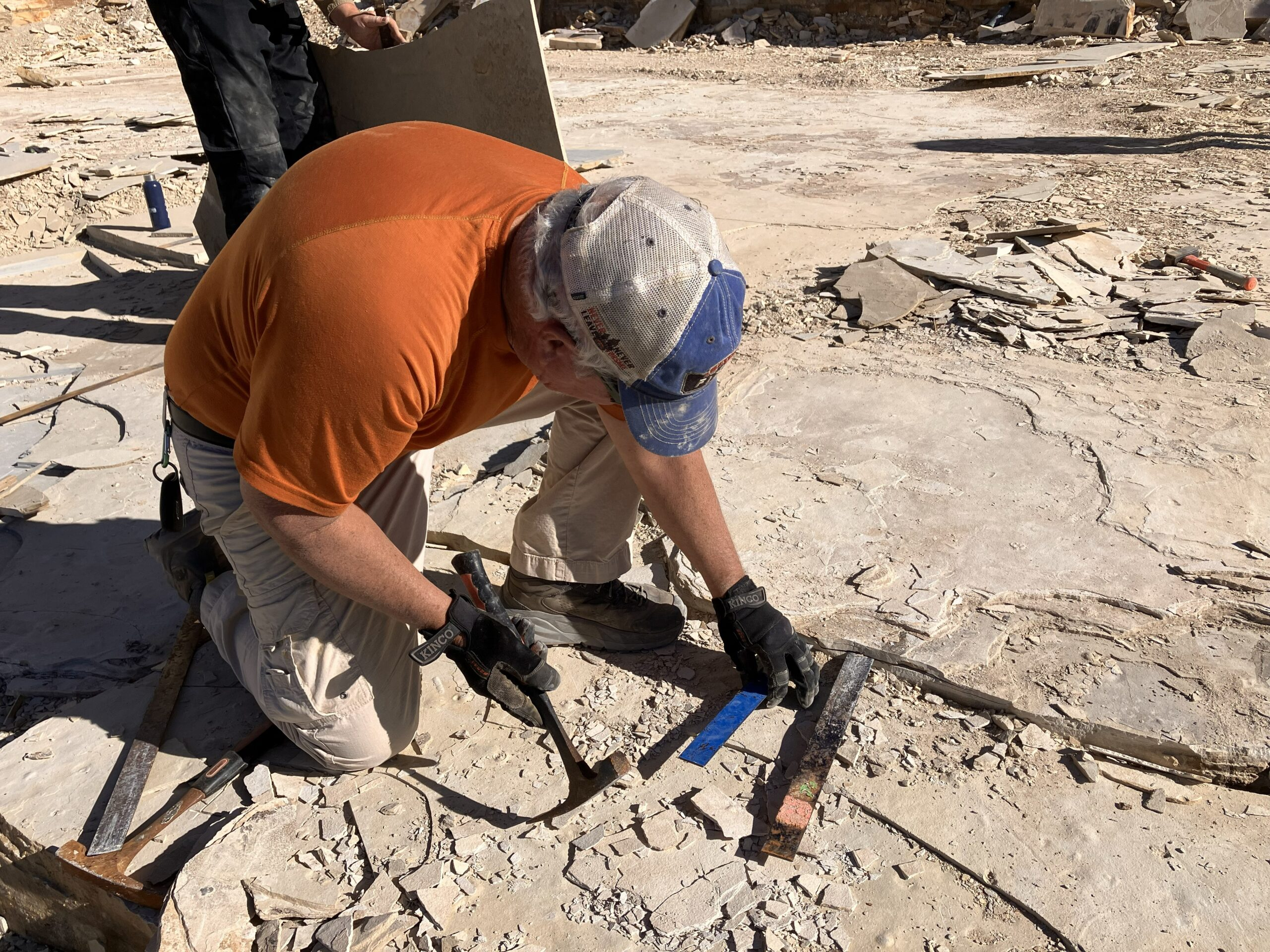
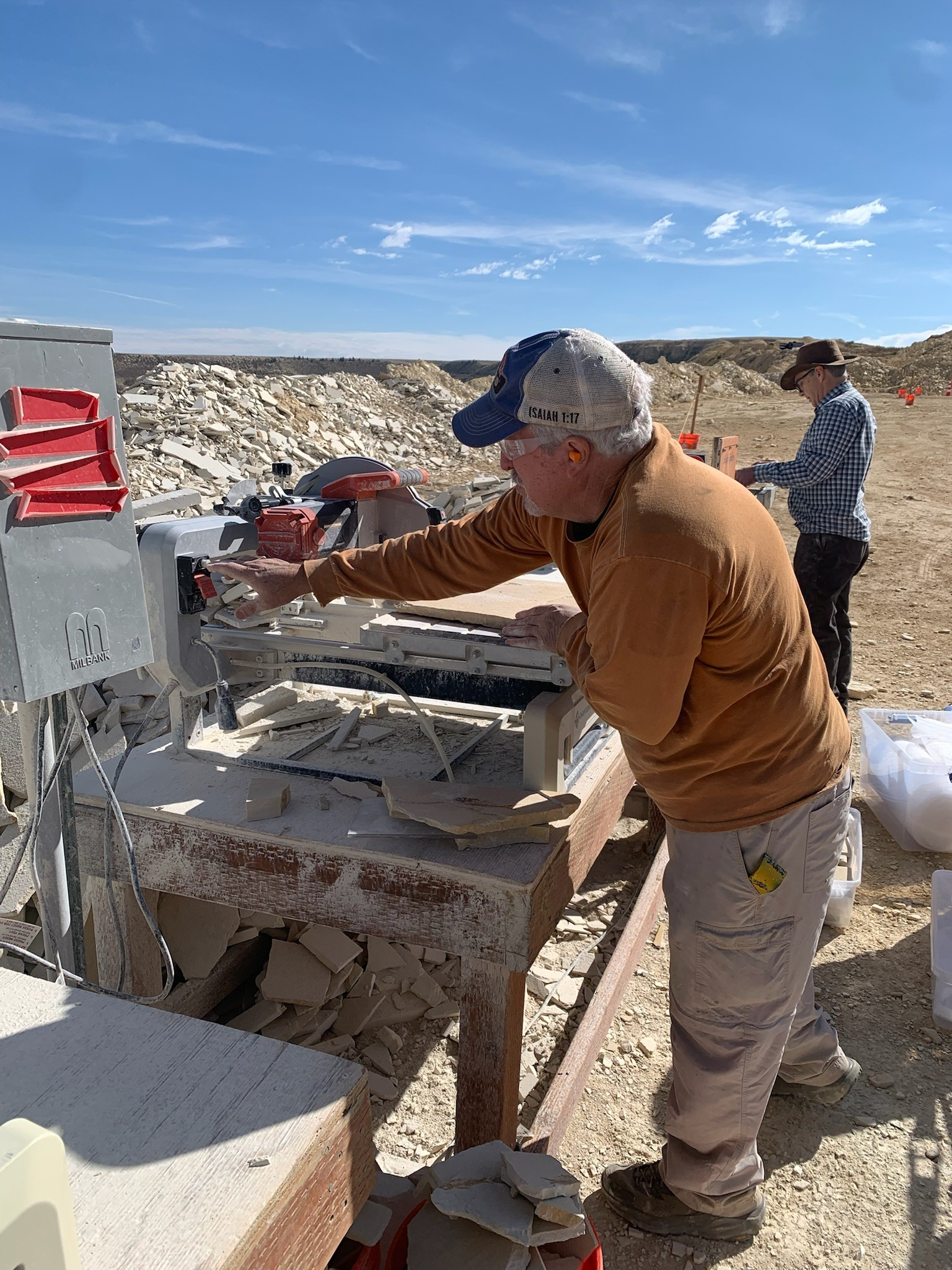
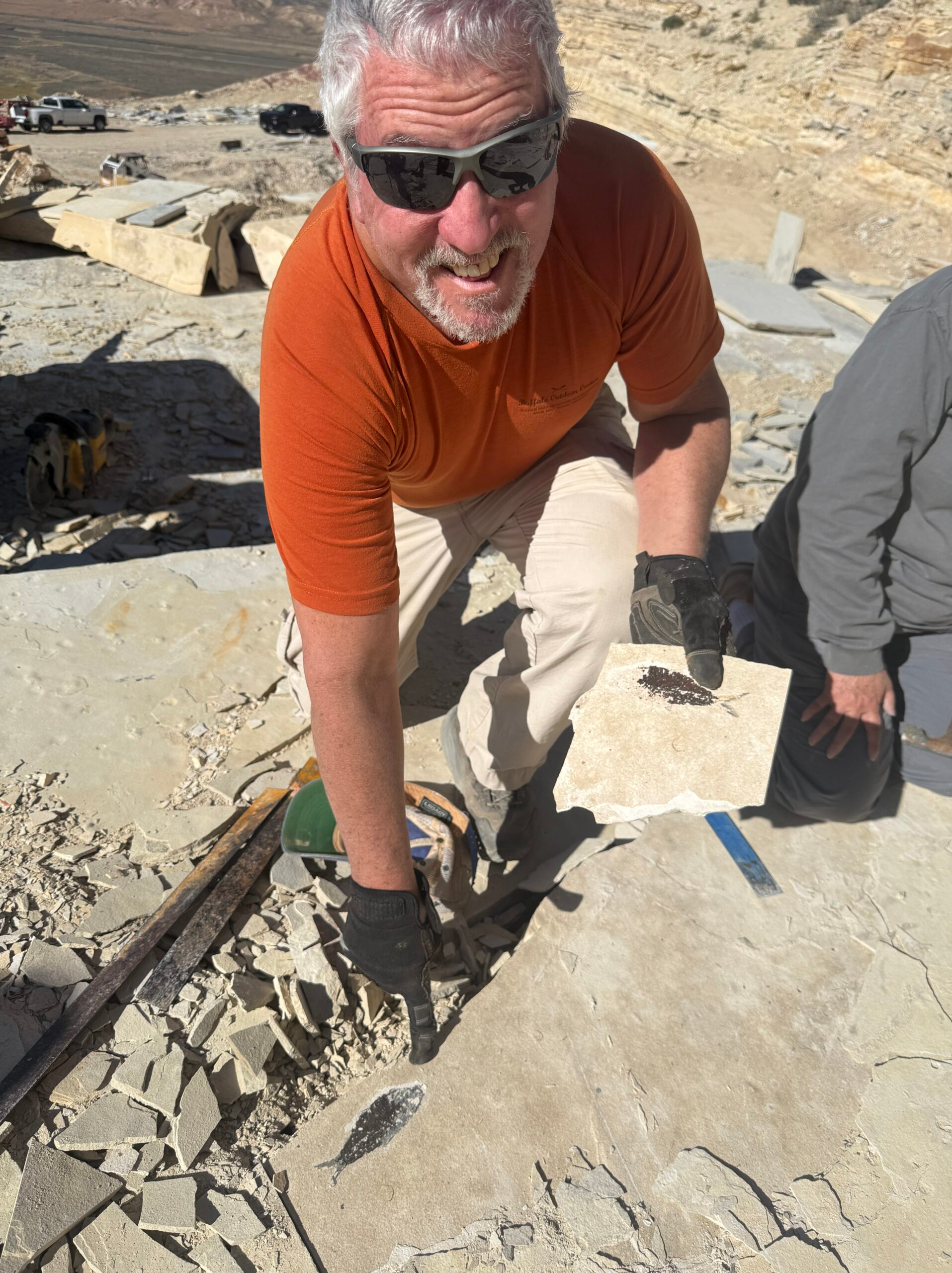
Since Ruby and I had been there many times and it was the first time for the other 5, we spent a lot of our time assisting them, filming, and cutting the rocks they found. What a day we had, The team was having so much fun splitting rocks and finding fossils that they didn’t want to stop for water or food. That is until Momma Ruby put her foot down and made them take a break. We found more than 100 fossils, mostly Knightia (Sardine- like fish) but also an unusual amount of large fish including several Priscara as well as lots of fish poop and some plant fossils. Everyone found some cool fossils but Matthew, Joe and Craig made the greatest hauls and best fish. Ruby assisted me cutting the rocks up to display the fossils. We found so many fossils, we completely filled all the plastic tubs we brought and had to make two trips to get everyone and all the fossils back to our hotel and the Goke’s RV.
Upper Layer Dig
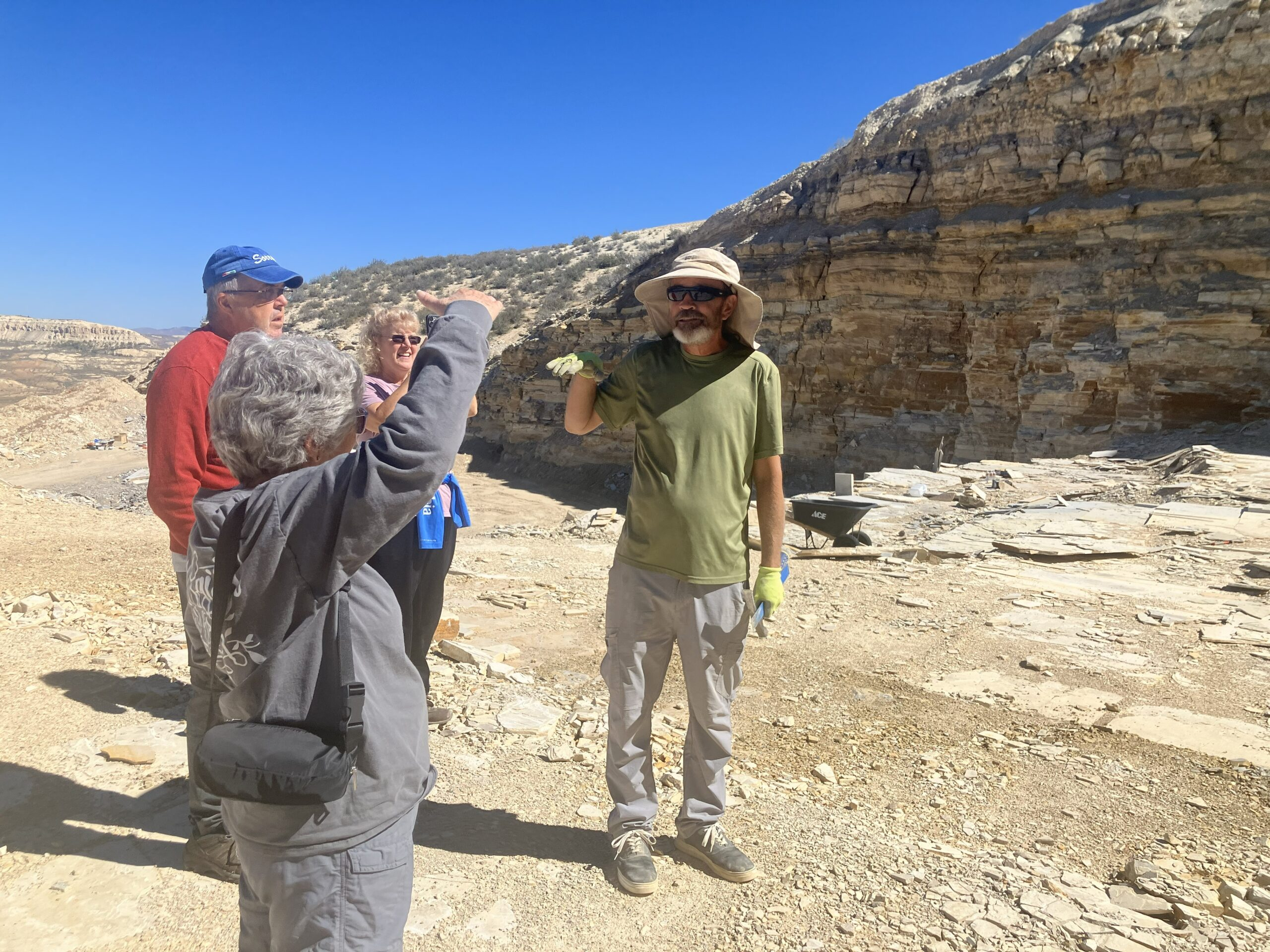
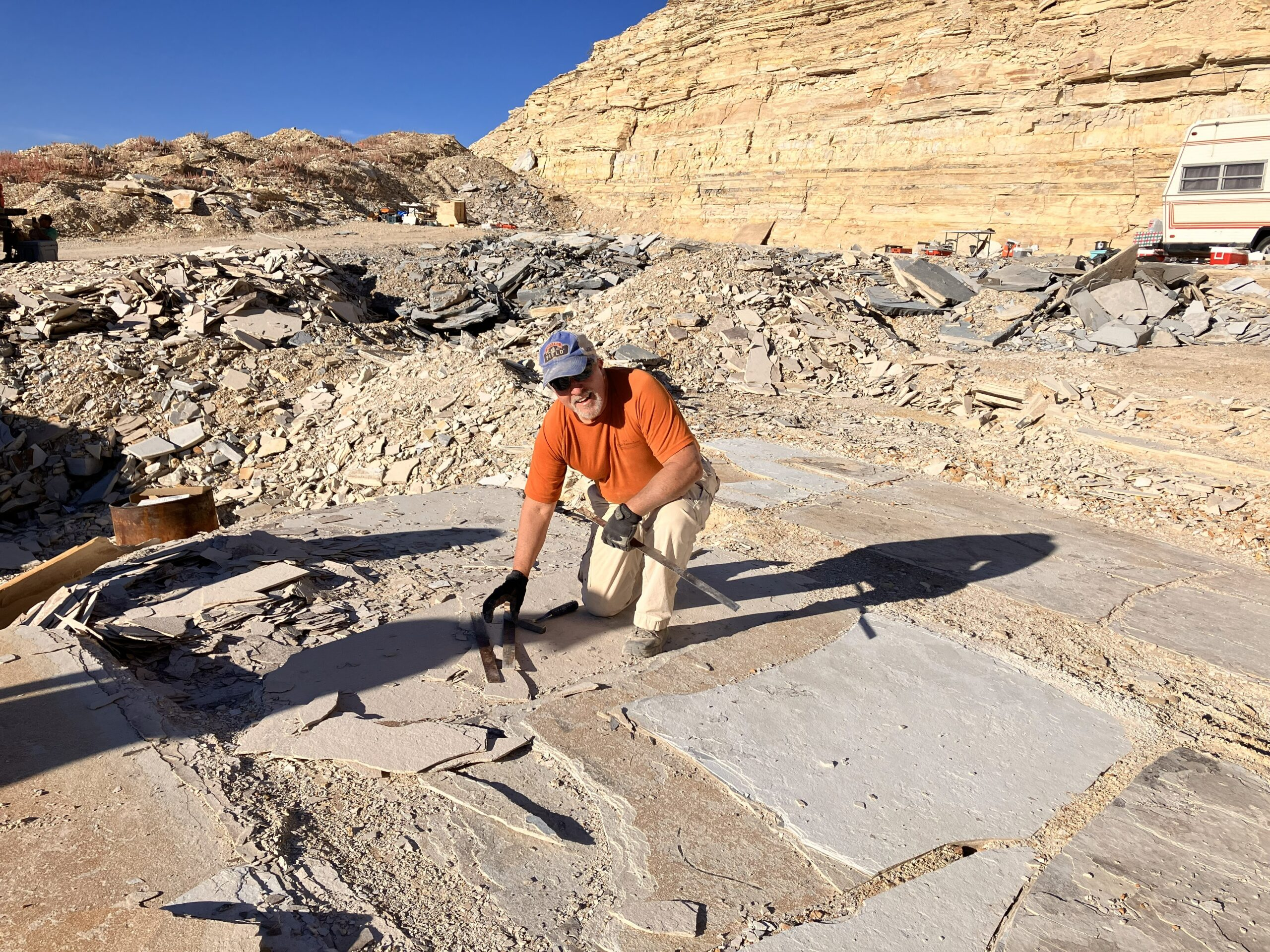
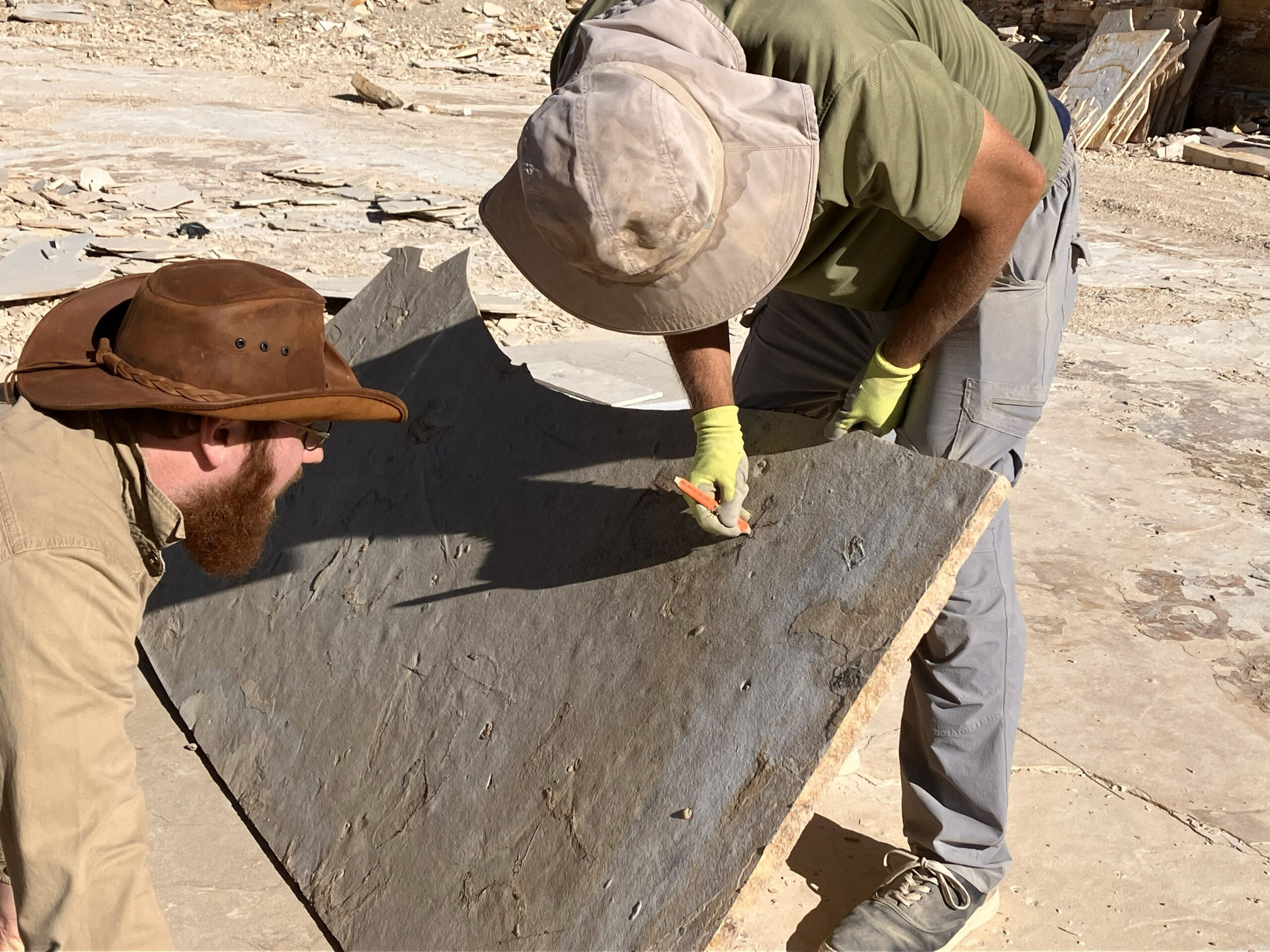
On our second stop at Kemmerer we went to a quarry owned by Geologist Todd Hoeg. He was going to lead us on a night dig but with temperatures dropping into the low 30’s we decided to do an evening dig. These layers are not easily split so the method of finding fossils was completely different than for the lower Split-Fish layer previously dug in. Large (around 5 foot width) thin-slabs (about 1-2 inches) of rock layers are removed by splitting with 2-ft long metal chisels. Then these thin large layers are lifted out of the way by 2-3 people. The new exposed surface is then inspected carefully for fossils but these fossils are not really exposed on the surface, they are still covered by a thin veneer of sediment inside the exposed rock layer. These fossils are identified on the surface by very slight changes in the surface elevation. A light shining across the surface at a low angle, such as a night light or low sunlight before sunset, helps to identify the slight impressions and shadows that indicate a fossil is just below the surface. It took a lot of training by Todd Hoeg for us to get the hang of spotting fossils still embedded in the rock. It was a challenge but so rewarding.
The size, variety and uniqueness of the fossils found made this evening dig especially interesting and rewarding. We found lots of large fish but also lots of rare fossils including plants, flowers, insects, and nuts. One of the best finds was a 5 foot long fish track which is a trace fossil made by the trail of the fish as it swims through sediment rich flood waters.
Since returning from fossil digs out west, I have cleaned up around 100 fossil fish by removing the 0.2 mm sediment layer from over the fossil and sealing them. We also had Todd Hoeg prep the larger more valuable fossils. During prepping, I discovered some truly special finds, like a fish in the process of laying eggs, a complete pin oak leaf, a Hawaiian nut (Macadamia nut) While we didn’t find any extremely large fish or extremely rare fossils like mammals or birds, just the week before we arrived, our guide, Todd Hoeg, found a 6 foot long alligator at the site.


Trips like this allow us in creation research and education ministries to not only have a means to support this ministry by selling the fossils we find, but it allows us to grow in our experience and knowledge by digging in one of the most famous fossil beds in the world. Your support of this ministry allows this research to take place so that we can bring the evidences for the truth of God’s word to you.