The Hell Creek Formation covers eastern Montana and extends into North Dakota, South Dakota, and Wyoming. It is approximately 575 feet thick and consists of sandstones and shales interbedded with lignite which is also known as brown coal. According to Wikipedia, the formation was deposited by shallow seas during the Cretaceous period so they admit to it being a flood deposit just not a global flood deposit.
The Hell Creek Formation is famous for its diverse fossil beds, especially for containing T-Rex, Triceratops, and various other theropods as well as numerous other dinosaurs, alligators, plants and mammals. Secular scientists view this diversity as “insights into the ecosystems of the time.” But, do buried bones indicate the ecological conditions from when the creatures were living, or do they simple indicate where they were buried (not even where they died)?
The Hell Creek formation is also known for containing the K-Pg boundary which some creationists believe is the demarcation between flood and post-flood deposits. The K-Pg boundary is a very obvious layer marked by dark, iridium enriched material which secular geologist suggest is the result of an asteroid impact that caused the mass extinction of the dinosaurs.
We were so blessed to have been able to meet Dr. Robert Canen who is the Director of Glendive Dinosaur and Fossil Museum and Pastor of Red Top Church. Robert held a social event for us at his home. There we not only had great food and fellowship with his family and staff but we got to meet Shana and Justin Baisch who are known for a large triceratops discovery on their ranch and for their participation in the show Dino Hunters.
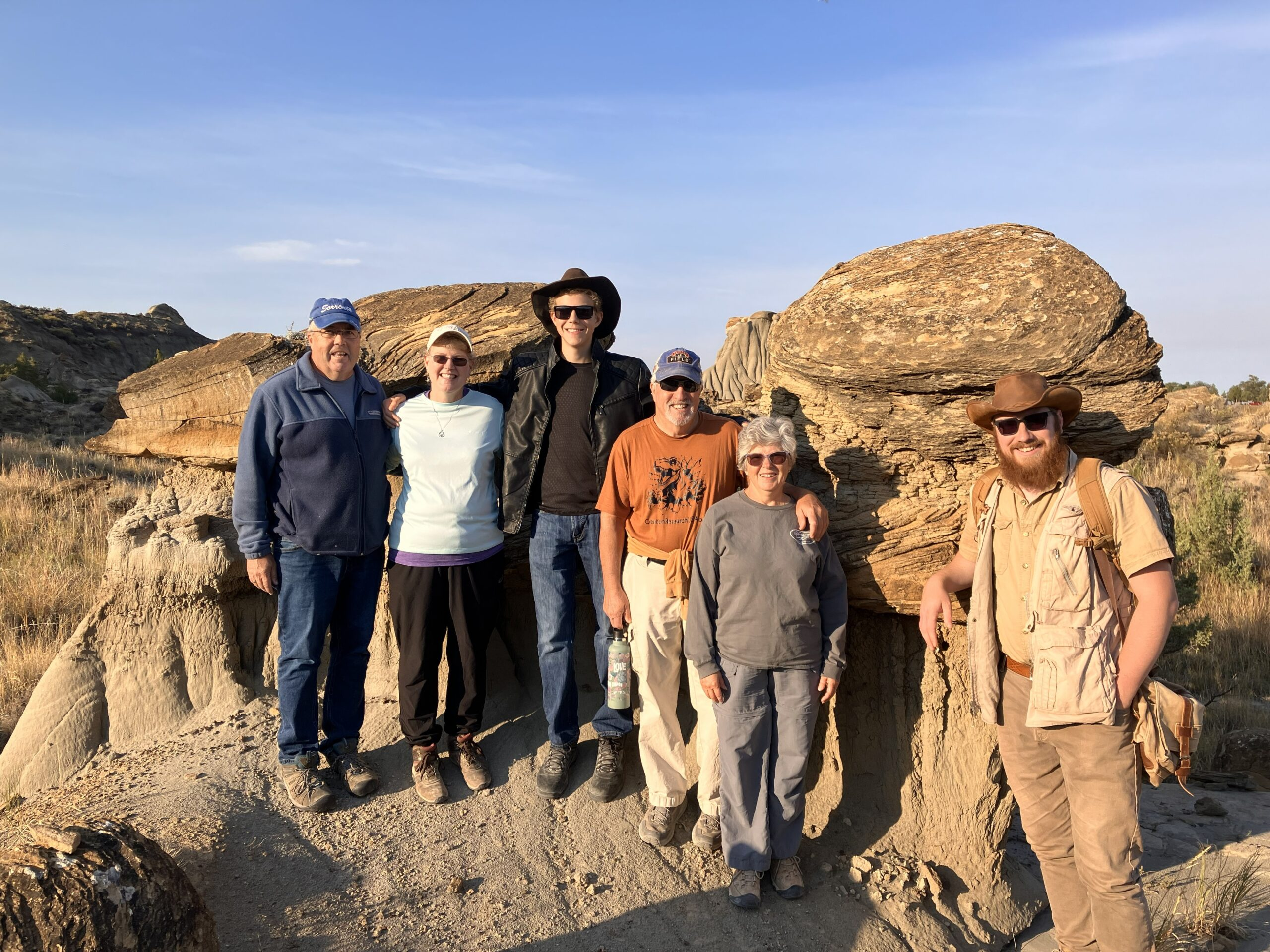
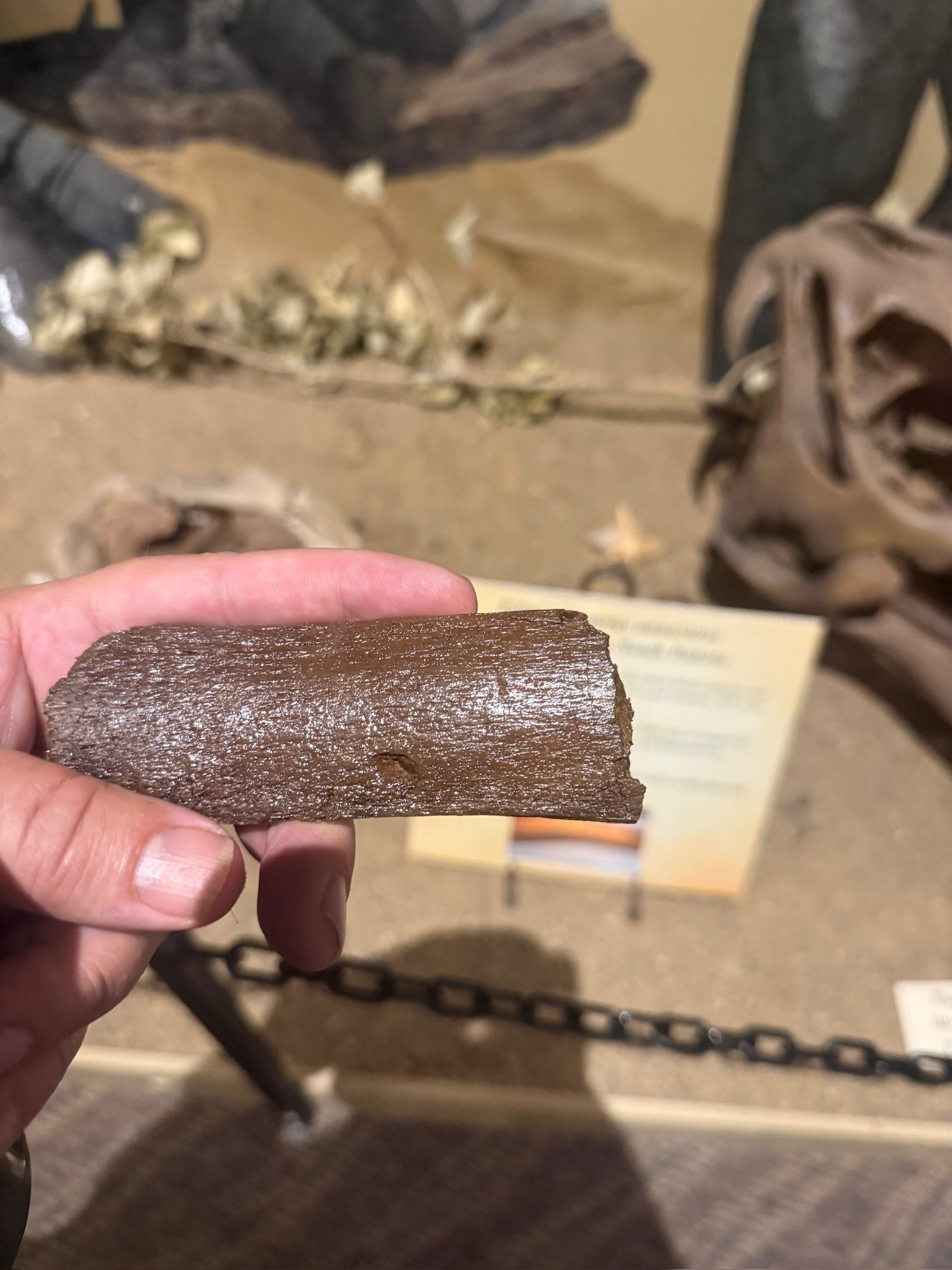
The next day, Robert and his staff led us on a fossil dig in a layer about 10 feet below the K-Pg boundary. They taught us the techniques they use to find and extract fossils. It was much more difficult to identify whether what we were seeing was rock or fossil than anywhere we had dug previously. There, Ruby found a fairly large turtle shell, a palm nut, several small bones and turtle scutes. I found a Triceratops tooth and toe bone, a tiny crocodile tooth, and a palm-sized dinosaur rib bone. Dennis found a pristine dinosaur rib bone and Matt found a fairly large section or T-Rex skull plate. Not bad for just a couple of hours of digging.
Probably the most significant aspect of our visit with Robert was the time we spent in their preparation lab, cleaning, gluing and sealing the fossils we found. We used pneumatic mini-jacks and a sand-blaster (actually it blast powder) to remove debris off the fossils. It was an intricate and delicate process. Once cleaned, we compared our finds to known fossil specimens to confirm their identity and then sealed them with fossil sealer.


The lessons learned and the experiences gained were invaluable to our future as creation scientist. Support from people like you make such digs possible.
Not only did we make multiple fossil digs, and explore MSH on this trip, but we spoke in three churches as we traveled across the western USA. This too you made possible through donations. Please consider supporting this ministry so we can continue to do creation research and education. We promise to use all donations strictly for ministry activities in the USA.