Exploring Mines and Streams with David Rives
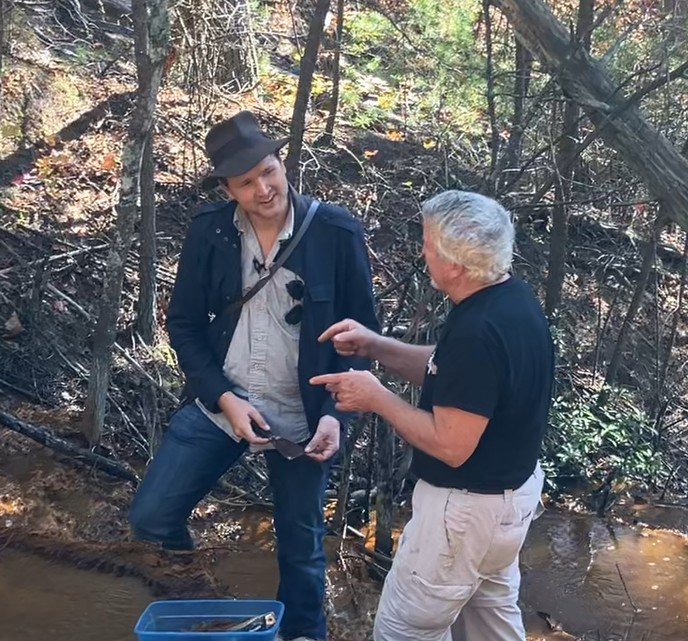
In October of 2024, Glenn & Ruby were joined by Michele and Tyler Campbell for a 10 day excursion digging fossils, visiting a creation museum, exploring with David Rives, and enjoying the fall colors.
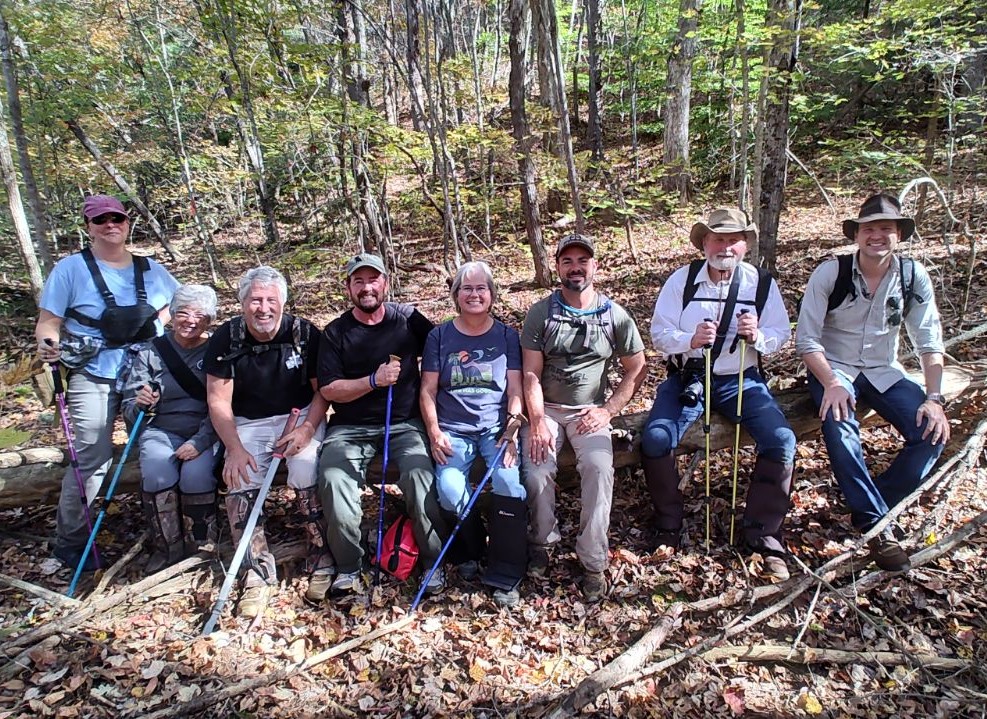
A team of CSM supporters and David Rives joined us to film inside an abandoned coal mine and a creek so high in dissolved iron (Ferrihydrite) that it rapidly fossilizes permeable objects by permineralization.
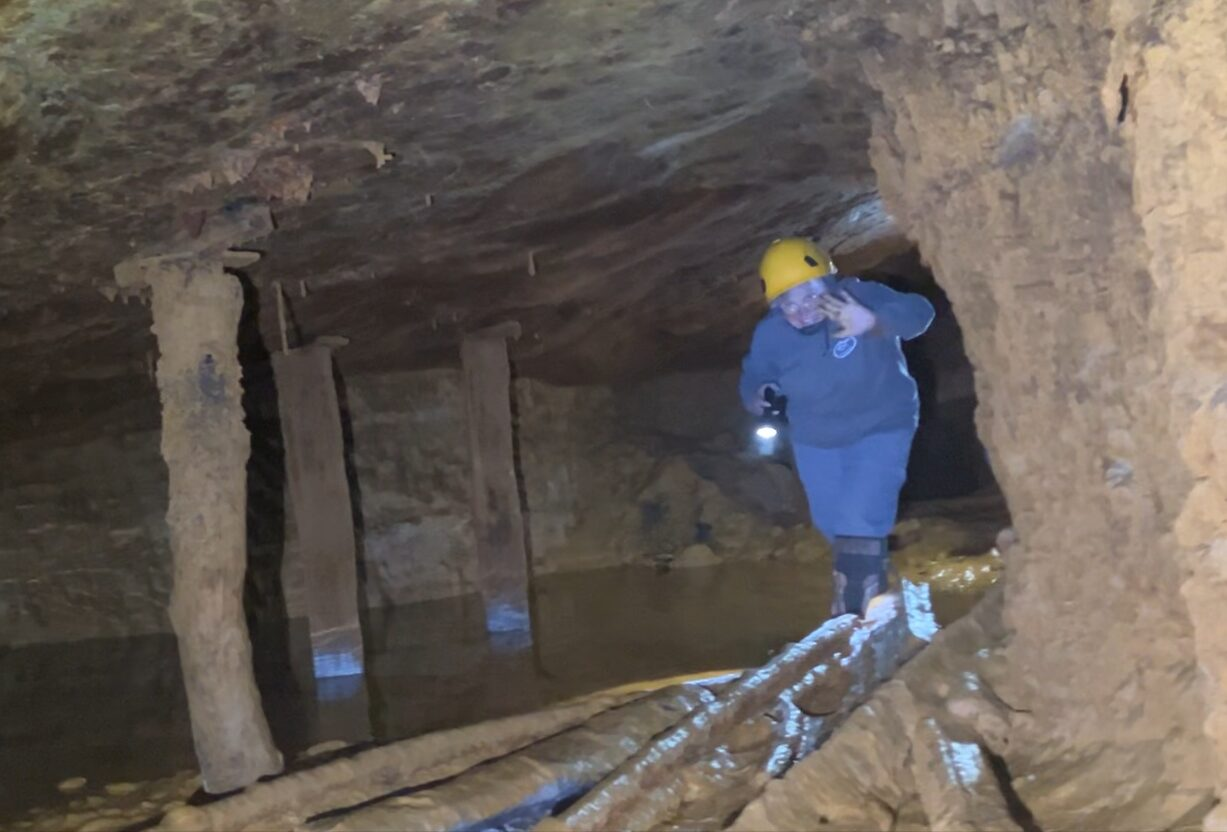
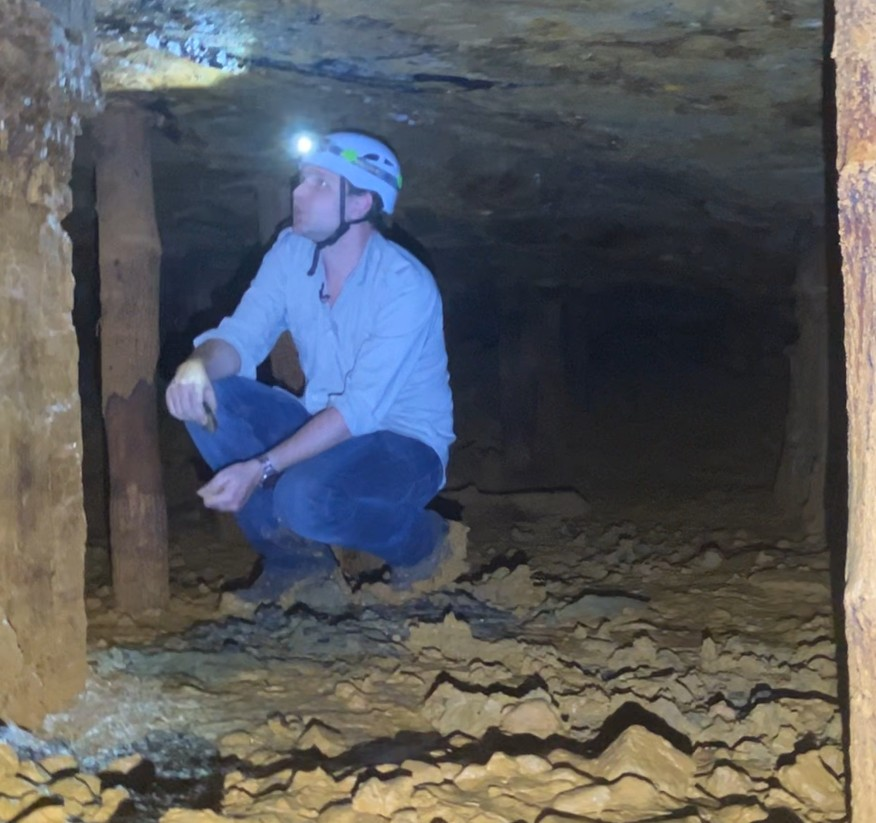
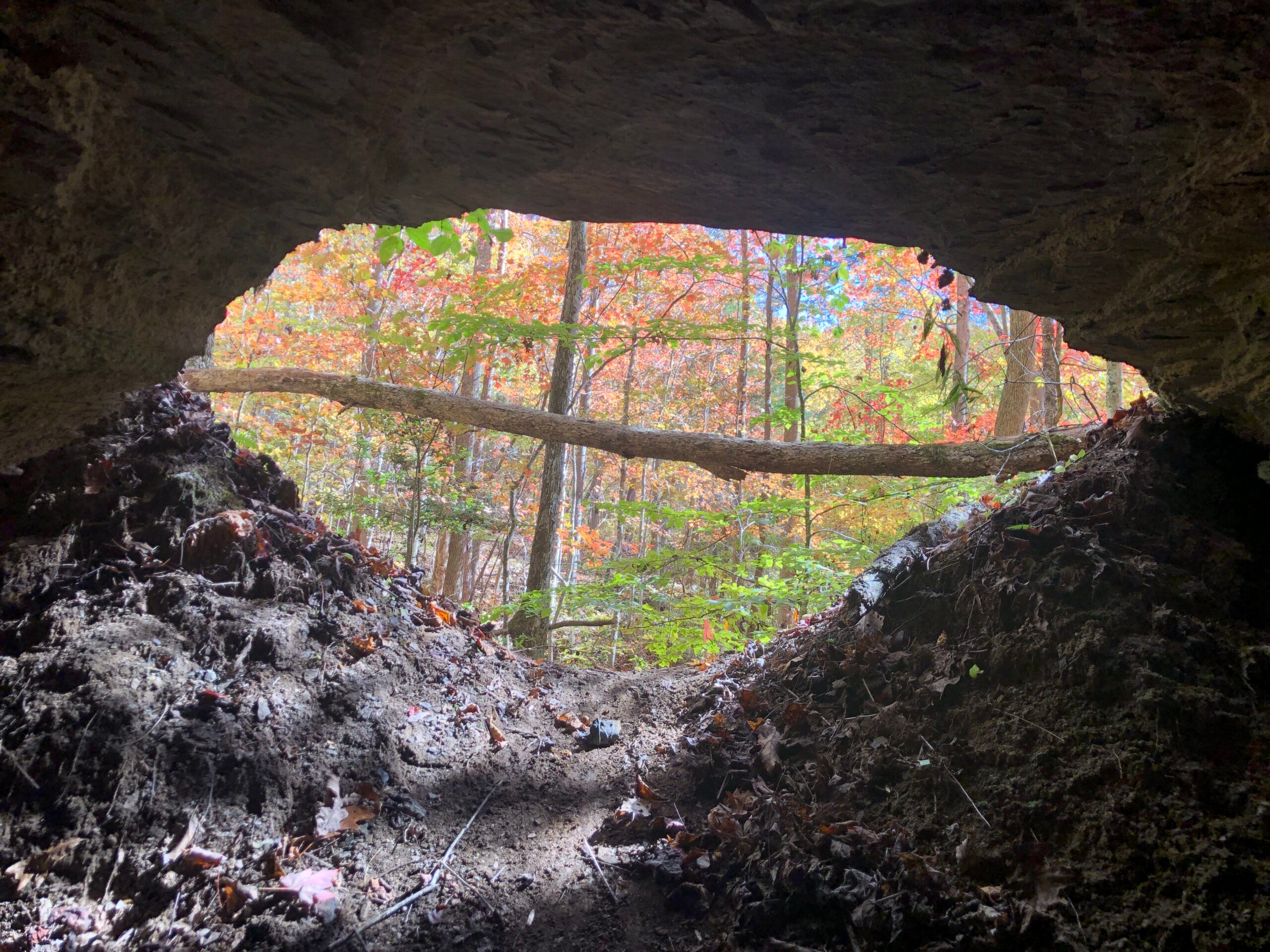
We decided to explore the abandoned coal mine that we went to with Indiana Joe in March 2023 but at that time it was too filled with water to explore. Being the driest time of the year, we thought it was a good time to explore and film inside the coal mine. Plus, we had an ER doctor and some young guys with strong backs in case we needed rescue.
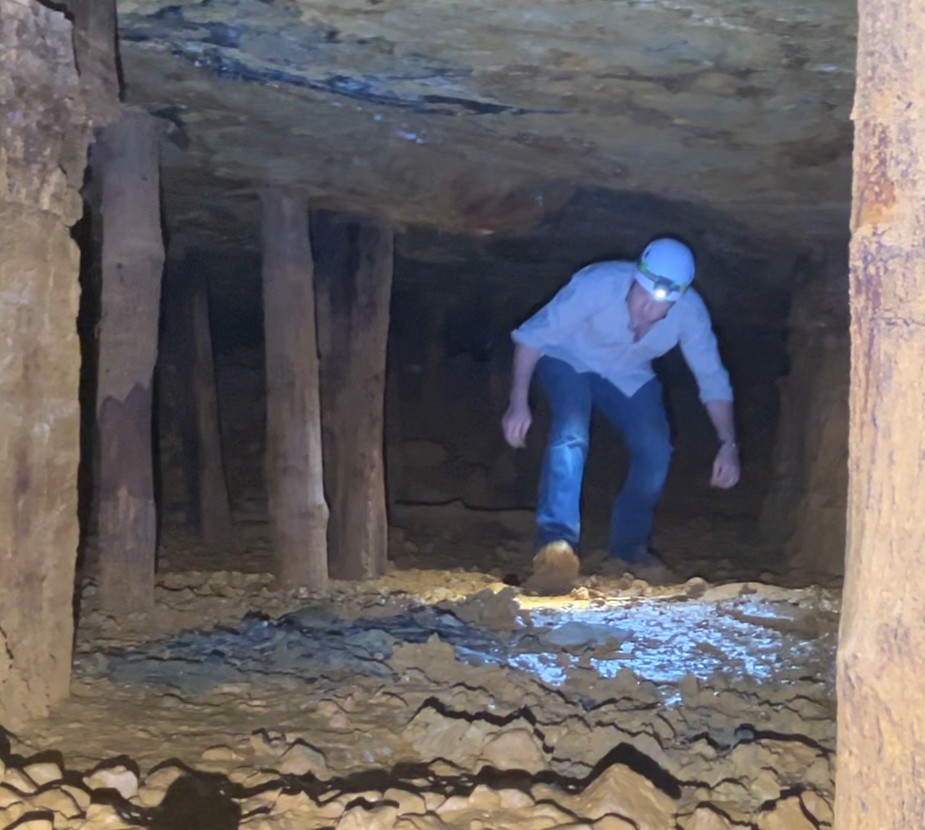
While it was drier than in March, it was still too much water to safely explore the entire mine-system. We were able to go back about a couple hundred feet along two main-branches of the mine, but it was too muddy to continue. We decided to film what we could and come back another time when it is even drier. While it was already dangerous enough, what with most of the old wooden braces either broken off and no longer supporting the ceiling or rotten and ready to break. When we saw a couple of our CSM team members leaning against these rotten braces, well let me just say, that we decided to head back out. I was more than a little relieved when we got out of the mine.
Coal mines when active and well-maintained are dangerous enough without the support beams being rotten or gone. One of the things that makes them particularly dangerous is when the miners contact a “kettle bottom.” That is the term they used to describe a polystrate tree sticking from the roof of the mine. As a creation scientist, such kettle bottoms are interesting because they are evidence that the rock layers were laid down over a short period of time. However, for a miner they are evidence that the material in the ceiling is unstable. We didn’t find any polystrate trees inside, but it was really cool and interesting exploring the mine. The mine was abandoned in the 1960s and had stalactites (soda straws) hanging down nearly a foot in length, so much for those taking millions of years to form.
Rapid Fossilization by Permineralization
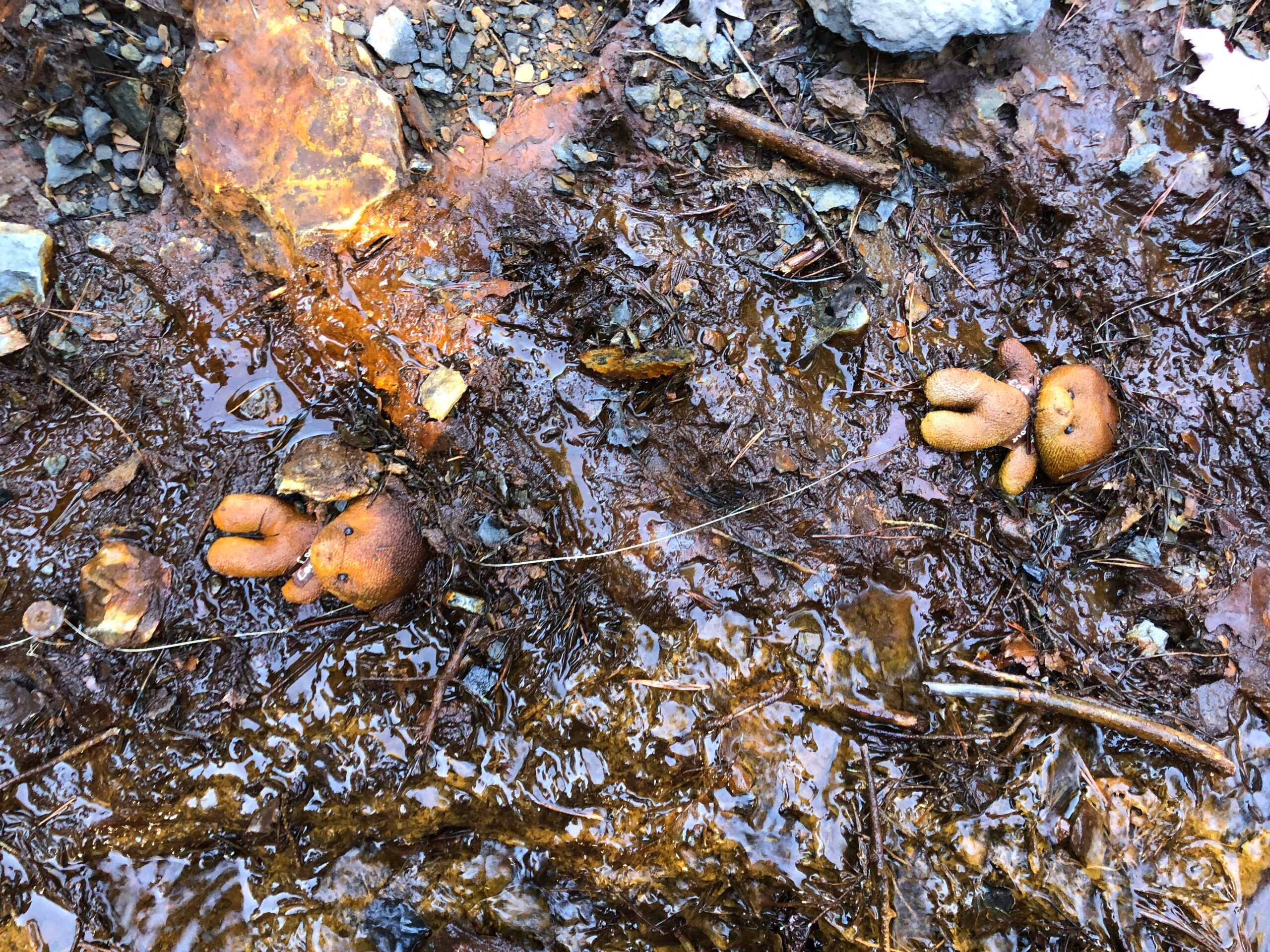
Permineralization is the most common means of fossilization. This happens when organic materials, whether dead animals or plant material are buried in mineral rich waters that permeate the organic material. We have tested this process under natural conditions at today’s rate of permineralization and shown that the fossilization process can be extremely rapid. We have tested this by placing stuffed teddy bears in an iron rich creek.
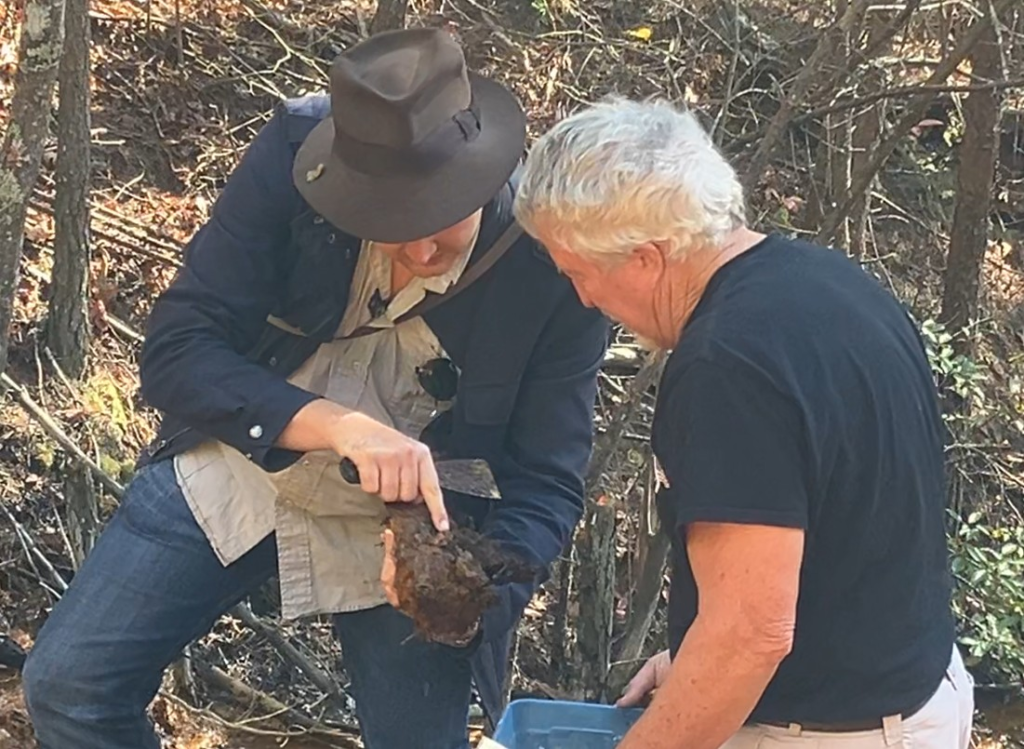
On this trip in October 2024, we went to collect the teddy bears placed in the creek out in June about 4 months earlier. From experience in the Smokies of trying to capture a small black bear and put it in our RV, collecting fossilized teddy bears is a lot safer and legal (maybe I’ve gotten a little wiser with time).
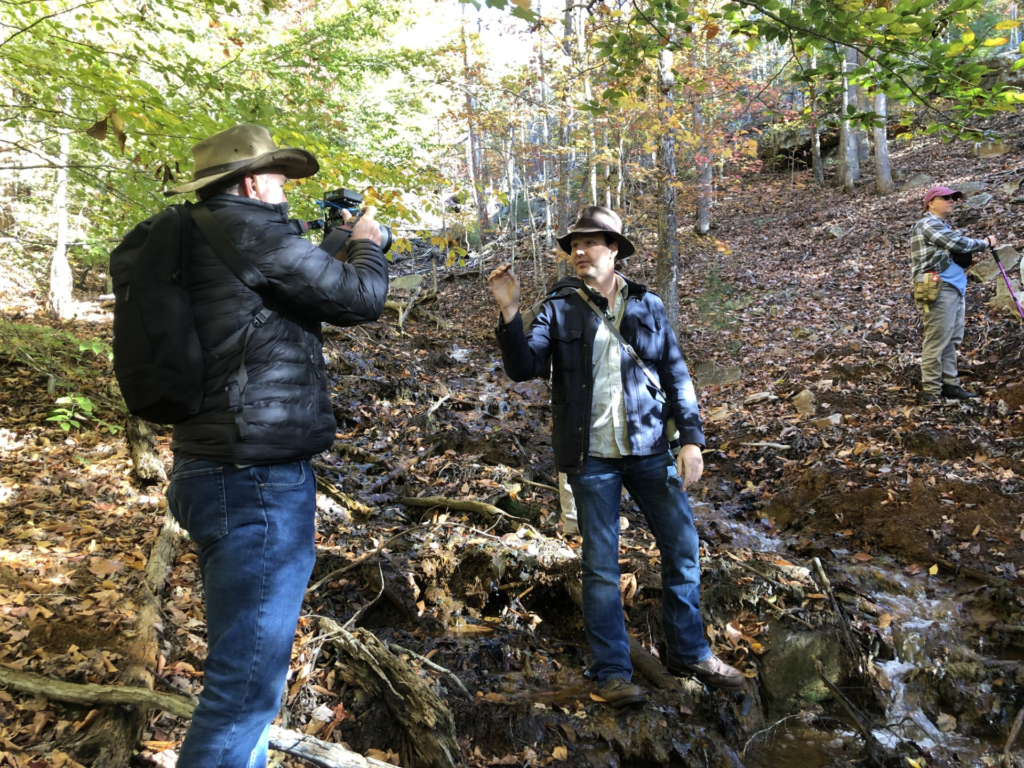
The creek flows rapidly down a steep slope. As the water spills off ledges it is oxygenized which causes iron to precipitate out of solution. The precipitate clings to leaves, branches and other permeable organic material and rapidly fossilizes them, thereby forming small dams. This produces a unique formation of dams formed by precipitation of the super-saturated iron-rich water that cements the fallen leaves, pine needles, and other organics which leaves pools of water behind the small dams. This makes for a series of cascading waterfalls of iron rich water. We climbed up the creek which is more like a stair-stepped waterfall. We filmed the retrieving of these rapidly fossilized teddy bears for a show on the Genesis Science Network. It was a fun trip and no one fell or got hurt-that’s always a good trip. We also collected about 30 partially fossilized Teddy Bears.”
Pray about financially supporting our ministry. Your gifts make this type of work possible.