Engage with Thought-Provoking Insights
Explore compelling content that bridges Biblical truths with scientific discovery, enriching your faith and knowledge.
Explore this question of Post-Flood Mammoth Population
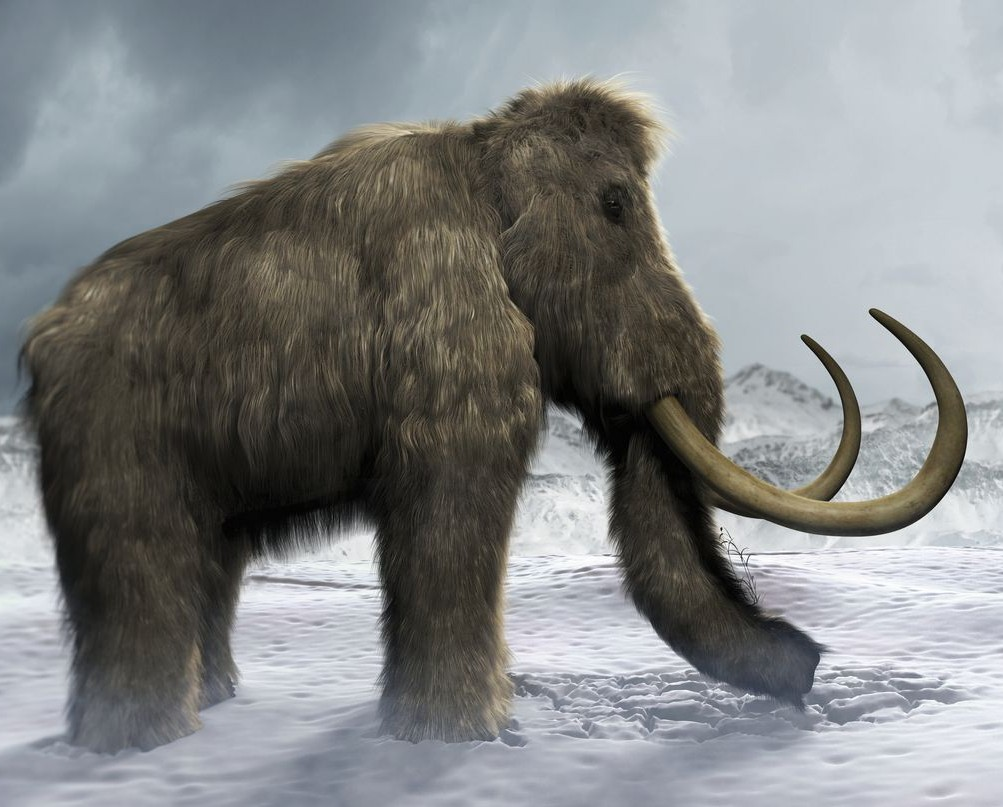
Michael Oard in his book ‘Frozen in Time’, talks about his predictions on the effects of Noah’s Flood on the post flood environment. His climate simulations predicted that the conditions after the flood would produce a single Ice Age that took about 500 years to reach its maximum and 200 years to melt with intermittent glacial and interglacial periods over the 700 years after the flood.
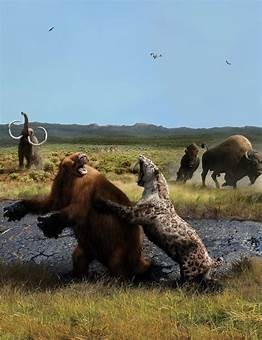
It has been estimated that there are millions of mammoths buried in the permafrost in Siberia. These animals are not buried alone but with bison, woolly rhinoceros, horses, wolves, brown bears, cave lions, moose, and saiga antelope. All these died en mass during or shortly after the Ice Age. There are many mysteries associated with the Ice Age but one question that gets asked regarding the creationist view of one Ice Age over the first 700 years after the flood is how could there have been this many animals.
Wooly Mammoths are of the same kind as elephants so we can assume that their reproduction would be similar. Elephants today begin breeding around 10 years old and typically have one calf every few years. Bison have similar but slightly higher reproduction rates. Most of the other animals found buried with Mammoths can have one to two off-spring per year, so the slowest reproduction rate is the Mammoths.
What we know is that two of each kind of unclean animal exited the Ark. It is safe to assume that they gave birth shortly after exiting the Ark as God told them to be fruitful and multiply and fill the earth. Starting with two elephants/mammoths exiting the Ark and these two having two more every 10 years (1 every 5 years) until they are around 80 years old then no more offspring. You would think that the population could not grow given those limitations.
Thought Provoking Assumptions
1
Mammoth Breeding
Wooly Mammoths begin breeding around 10 years old.
2
Reproduction Rate
Wooly Mammoths have one calf every 5 years.
3
Stop Breeding
Mammoths continue breeding till 80 years old.
4
No-Predation
No death of Mammoths.
Let’s see, if the population can grow. Over the first decade they have 2 calves then after another decade the first two off-spring also have offspring, and a decade later their offspring start to have offspring (2 every decade). After 100 years there would only be around a thousand total.
That doesn’t sound very promising but this is where the phenomenon of compounding interest kicks in, over the next 100 years the population grows to around 200,000 then explodes by year 300 to over 5 million.
This assumes a lack of predation which is reasonable early on given the abundance of dead carcasses from the flood for carnivores to feed on. Mount St Helens eruption demonstrated how quickly an ecosystem can recover following complete devastation. Within a decade the land that was completely denuded (bare) of vegetation at the end of the flood, would be covered in green vegetation. The rapid plant growth following the flood would provide an abundance of food and excellent cover for animals, especially considering the sparsity of wildlife after the flood. Predation would be very limited for an extended period of time after the flood, especially if the animals scattered as they were commanded to do (i.e., fill the earth). Plus, since God commanded them to be fruitful and multiply, and we know God sees even the sparrow when it falls, we can expect God’s hand of protection to be upon them. All these factors would contribute to Elephants getting the needed years to build their population up till it could explode and scatter to environments where hairy offspring, i.e. Wooly Mammoths, that are better suited to cold environments would be selected (adaptation not evolution) from the genetic diversity already existing in the gene pool of those selected by God to enter the Ark.

Discover Insightful Truths with CSM
The conditions of the flood not only explain the onset of an Ice Age, they provide the conditions needed for cold-tolerate animal populations to explode and migrate, thereby obeying God’s command to multiply, and fill the earth.